SENATOR NORBERT BASENGEZI CALLS FOR EARLY CONSTITUTIONAL AND ELECTORAL REFORMS BEFORE 2028 POLLS
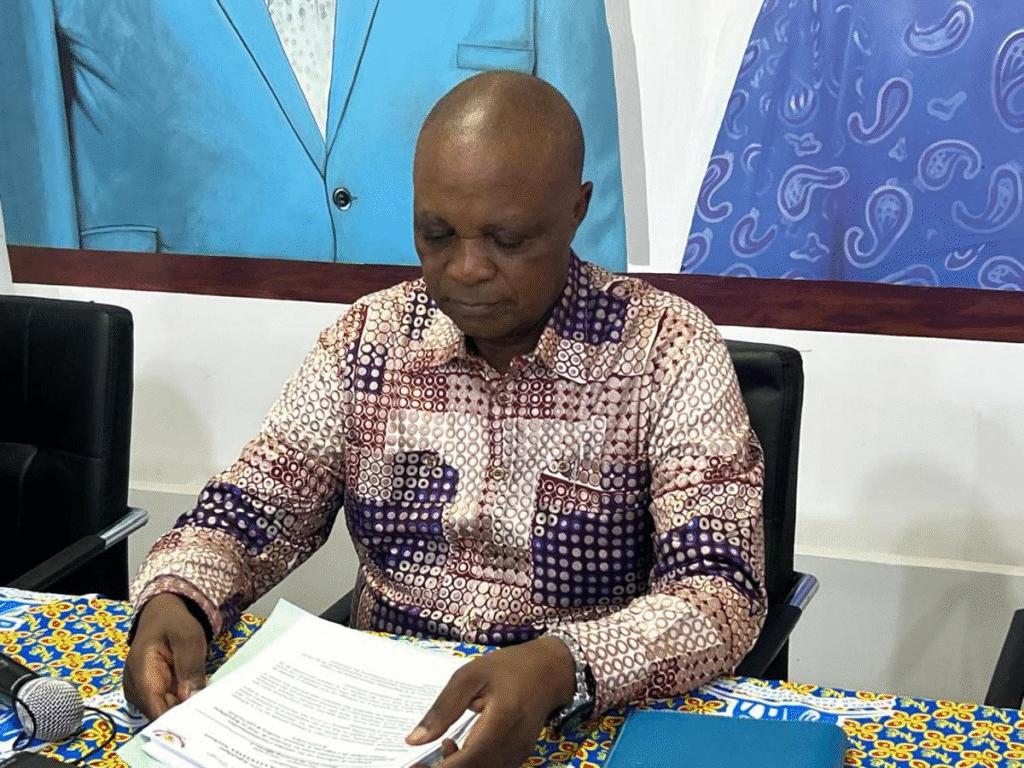
Senator Norbert Basengezi has called for an urgent national dialogue on constitutional, institutional, and electoral reforms — urging the Democratic Republic of Congo to begin addressing its governance framework years before the next elections. Speaking in Kinshasa on Saturday, July 19, 2025, the seasoned politician said that waiting until the eve of elections to amend critical laws has repeatedly fueled tension, division, and mistrust.
“Every electoral innovation introduced at the last minute generates unnecessary conflict,” he told supporters and civil society representatives during a political morning meeting. “We must start early if we truly want credible, peaceful, and transparent elections in 2028.”
Drawing on his experience as former vice president of both the Independent Electoral Commission (CEI) and later the Independent National Electoral Commission (CENI), Basengezi said the country’s legal framework governing elections has become outdated and needs thorough revision.
“Most of these laws were adopted 22 years ago,” he noted. “Realities have evolved. The challenges we face today are not those of 2003. As a senator, I have the responsibility to propose reforms, consult the people, and ensure that civil society and political parties help shape a new, modern electoral system.”
Among the key legal instruments Basengezi identified for review are the Constitution, the organic law governing the CENI, the law on voter identification and registration, and the electoral law itself. These, he argued, must be aligned with the current socio-political and technological context to guarantee more transparency and fairness in the next elections.
His remarks come amid growing debate in Congo about the need for electoral reforms, particularly in light of the controversies surrounding the 2023 polls and the challenges of implementing inclusive participation in conflict-affected areas. Many observers say that without early reforms, the country risks repeating the same disputes that have marred nearly every electoral cycle since 2006.
However, Basengezi was careful to emphasize that constitutional amendments cannot take place under the current “state of siege” imposed in eastern provinces, where military authorities remain in control due to ongoing insecurity. “The Constitution cannot and must not be altered during this exceptional period,” he said, reinforcing the principle of constitutional stability amid crisis.
Basengezi’s call was met with cautious optimism from civil society leaders attending the event. Some applauded the initiative as a proactive approach to prevent another political crisis, while others warned that discussions on reform must not become a pretext for power consolidation by political elites.
Still, the senator insists his motivation is rooted in institutional strengthening, not partisanship. “Our goal must be to build confidence in institutions,” he said. “Reforms are not for the benefit of those in power, but for the credibility of our democracy and the dignity of our people.”
As Congo inches closer to 2028, Basengezi’s message resonates as both a warning and a proposal — that true reform must begin now, not in the heat of election season.