CURRENCY CHAOS IN GOMA: WHEN THE DOLLAR DECIDES WHO EATS AND WHO STARVES
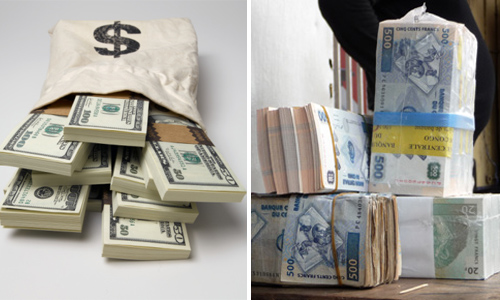
In Goma, money has become a weapon. Every day, families wake up to a new exchange rate, a new price, and a new struggle. The city, already crushed under occupation, now faces another invisible enemy — the collapse of its currency. The Congolese franc is no longer just weak; it is broken, bleeding, and abandoned to the mercy of money changers and opportunists.
With banks closed and no functioning monetary authority, Goma’s economy has become a free-for-all. The exchange rate now shifts not by law or policy, but by whim and survival. It is a market of desperation, where every transaction comes with its own price tag, its own logic, its own injustice.
For electricity, a bill of 10 dollars with the national company SNEL costs 28,500 Congolese francs. The same amount of power from private operators like Virunga and Socode costs 32,000. School fees are calculated at 35,000 francs per dollar — because, as one teacher explained bitterly, “the schools must also survive.” Even withdrawing your own money through mobile platforms comes with a different rate — 28,500 francs per dollar, if you are lucky enough to find cash at all.
At the money changers’ stalls, the chaos is worse. They buy dollars at 30,000 francs and sell them at 33,000. In the space of a few streets, the same dollar wears four different prices. The poor, the workers, and the small traders are paying the cost of a financial system that no longer exists.
“Where are we going, and who really sets the market rate?” asks one mother, standing outside a closed bank. Her question echoes through Goma’s streets, unanswered. The people have no authority to appeal to — only markets ruled by men with briefcases full of cash and hearts empty of empathy.
On social media, frustration has turned into a digital uprising. Residents are demanding that those controlling Goma’s administration intervene to stabilize the currency and bring back order. They post pictures of inflated prices and desperate families, calling for a solution to a crisis that is not just economic, but human.
For many, this exchange rate disaster is worse than the sound of gunfire. At least war, they say, has a beginning and an end. This war — of inflation, speculation, and silent theft — never stops. Every rise in the rate is another meal lost, another child pulled out of school, another house that will go dark when the power runs out.
In Goma today, freedom costs 33,000 francs to the dollar — and for most people, that’s a price they can no longer afford.