GOMA ON THE EDGE: THE WORLD WATCHES AS CONGO BRACES FOR ANOTHER MASSACRE
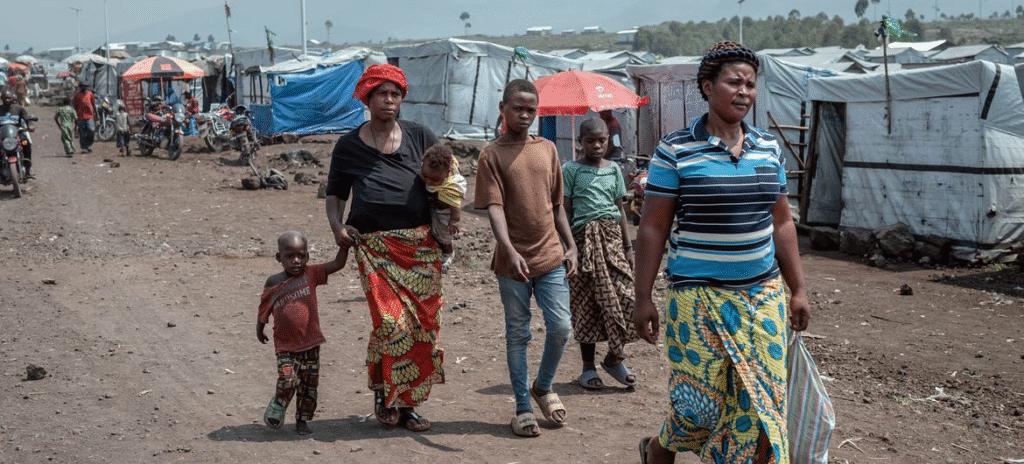
The sound of bombs has become the lullaby of our nation. In North and South Kivu, children no longer ask why they are running — only where they will sleep tonight. The rebels are moving closer to Goma, and the world, once again, looks away as the Congo bleeds.
The United Nations has warned that M23 — armed, trained, and bankrolled by Rwanda — may launch a full assault on Goma. For those who have seen this before, it feels like 2012 all over again, only this time worse. Then, the M23 captured Goma for 11 days. Now, they control nearly the entire east. If they take Goma again, it will not just be a city that falls — it will be a symbol of Congo’s collapse.
Ravina Shamdasani, the UN human rights spokesperson, said it plainly: “We are deeply alarmed at the heightened risk of an attack on Goma.” But the world has heard those words before. Alarmed. Concerned. Deeply worried. These words don’t stop bullets. They don’t feed the displaced. They don’t bring back the dead.
This war is not about politics anymore — it is about profit. The rebels want our land, our minerals, our lives. They claim to fight for “rights,” but what kind of liberation kills children? What kind of justice rapes women and calls it war? The UN confirms what we already know — sexual violence is not collateral damage in Congo. It is a weapon. Women and girls are being abducted, enslaved, and killed. Their bodies have become the battlefield that M23 and its backers use to humiliate us.
And where is the Congolese army? Exhausted, underpaid, and betrayed. Soldiers at the frontlines wait months for their salaries while their generals negotiate politics in Kinshasa. The government speaks of sovereignty while surrendering control of half the country. The people of Goma are left alone — trapped between M23 rebels and an indifferent world.
The camps are overflowing. More than 400,000 people have been displaced this year alone — on top of the 4.6 million who were already homeless. There are not enough tents, not enough food, not enough hope. UN workers say they can’t reach many areas because of the fighting. Aid trucks are blocked, bombed, or looted. On 20 January, two children were killed when a camp in South Kivu was bombed. Their deaths did not make headlines.
And yet, as bombs fall on civilians, Rwanda still denies involvement. The United Nations, the U.S., France, and even the African Union have all said the same thing: Rwanda is backing M23. But Kagame’s government hides behind the same excuse — “defensive measures.” What defense justifies invading your neighbor, killing its people, and stealing its minerals?
UN Secretary-General António Guterres says he is “alarmed.” He calls on M23 to stop its offensive and withdraw. But the rebels do not fear statements; they fear strength. And Congo’s leaders have shown none. When the UN withdrew from South Kivu last year, they promised the Congolese army could handle things. Now Goma is surrounded.
Every hospital is full. Every road is lined with refugees. Every mother is terrified that her child will be next. “The people are exhausted by violence,” said a UN official. But exhaustion is a luxury — we are beyond that. We are broken, forgotten, and left to die in silence.
This war has never been about ethnicity or revenge. It is about minerals — coltan, gold, cobalt — the resources that make the world’s phones, cars, and computers run. While our people die, the global market thrives on their blood. Congo’s tragedy is not that we are poor — it is that we are rich in everything the world wants, except compassion.
If M23 attacks Goma, it will not just be another battle. It will be a catastrophe. Hundreds of thousands will flee again. Thousands more will die. The city that once symbolized resilience will become another scar in the story of a nation betrayed.
The world says it wants peace, but peace without accountability is just another pause before the next massacre. Rwanda must withdraw. M23 must disarm. And Congo’s leaders must finally choose — power or people.
Because if Goma falls again, it won’t be just the rebels’ victory. It will be the final proof that the world has abandoned Congo to die.