THE FALL OF MATATA PONYO SHOWS JUSTICE STILL WEARS A MASK IN CONGO
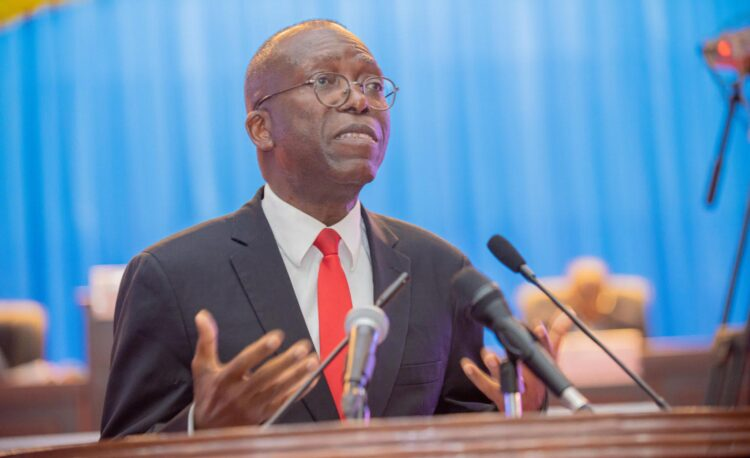
When the Constitutional Court sentenced former Prime Minister Augustin Matata Ponyo to ten years of hard labor, it was called justice. But in Congo, justice often looks more like theatre — a play written by those in power to remind the rest who is in charge.
Matata Ponyo, once known as “the man in the red tie,” is now branded a thief, accused of embezzling over 156 million US dollars. The court also ordered his immediate arrest and the seizure of his assets. His co-defendants — former Central Bank governor Deogratias Mutombo and Africom boss Christo Grobler Stéphanus — received five years each. But while the headlines scream corruption, many Congolese see something else behind this case: politics dressed as justice.
The charges come from the Bukanga Lonzo agro-industrial park — a project once celebrated as Congo’s future. Launched in 2014 with support from the World Bank, it was meant to turn our land into a breadbasket for Africa. Eighty thousand hectares of hope. Machines, investors, speeches — all the signs of progress. But by 2018, the park was abandoned. No jobs, no crops, no food. Only dust and shame.
The government spent $279 million. Only $34 million ever reached the site. The rest disappeared into air — or pockets. For years, no one was punished. But now, in 2025, suddenly Matata stands alone in court. Where were the others? The ministers, the directors, the consultants who approved every dollar? They still walk free. That is not justice. That is selection.
Matata himself says his trial violates his parliamentary immunity — he was elected as a member of the National Assembly in 2023. The court responded that his immunity as a senator was lifted before the elections. But many legal experts disagree. Professor Ngondankoy Paul-Gaspard, a public law scholar, asked the right question: how can a national deputy be judged without full authorization from Congress? The answer is simple — because in Congo, legality bends under political pressure.
This trial smells of revenge. Matata is no saint. He was part of the same corrupt system that has drained our nation for decades. But the sudden interest in his crimes feels too convenient. It arrives just as President Tshisekedi’s government faces growing criticism for its own scandals, from missing millions to human rights abuses. What better way to distract the public than to sacrifice a former prime minister?
The truth is, Bukanga Lonzo is not just Matata’s failure. It is a mirror of how our leaders treat development — as a playground for theft. What began as a dream of feeding the nation became another monument to greed. We were told the project would create jobs, modernize farming, and fight hunger. Instead, it became a graveyard of stolen promises.
A political analyst, Christian Magabo, called Bukanga Lonzo “the tip of the iceberg.” He is right. It is not the only scandal — it is simply the one that has become useful. The government pretends to fight corruption while protecting its own thieves. Journalists in Kinshasa whisper that real accountability will never come until the system itself changes — not just the names of those sitting in court.
If this trial is to mean anything, it must open the door to true justice — not selective punishment. Every politician, from past and present governments, must answer for the money they stole. Every project, from Bukanga Lonzo to the ghost roads of Katanga, must be investigated. Because corruption in Congo is not one man’s sin — it is the disease of a whole regime.
But I do not expect miracles. Our courts are still tools of politics, our judges still servants of power. Matata may be guilty, but his trial is not pure. He is being punished not because he betrayed the people, but because he lost protection.
Still, his story should remind us that the time for excuses is over. Congo’s suffering is not destiny — it is a choice made by men who continue to trade the nation’s wealth for personal gain. Whether in suits or in uniform, they are the same.
Matata’s red tie has turned into a rope. But many others wear ties stained with the same corruption, walking freely under the sun. Until the day justice catches up with all of them — those in power and those who once held it — Congo will remain a courtroom of hypocrisy.